Home / Locate the VIN without disturbing the vehicle
Locate the VIN without disturbing the vehicle
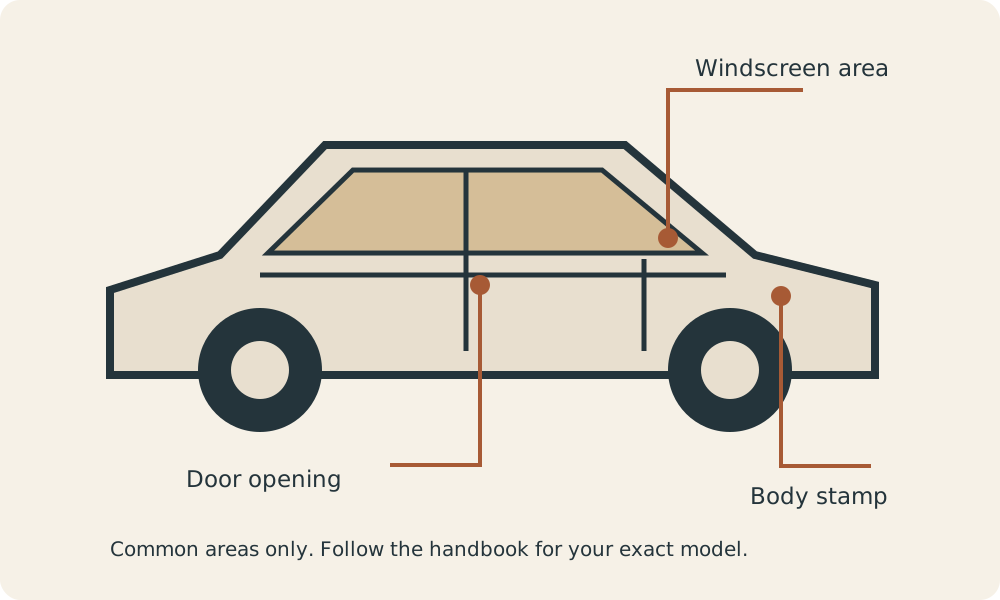
If you are asking where the VIN number is on your car, start with the vehicle handbook. It gives model-specific locations and avoids guesswork. Common places include the windscreen viewing area, a label in a door opening and a number stamped into the body or chassis.
You do not have to buy a lookup to read a VIN that is accessible to you. The aim is to find the complete number and compare it with the vehicle documents, not simply to locate a sticker that looks plausible.
Before you open or remove anything
Park safely, switch the vehicle off and ask permission if it is not yours. Use enough light to read the characters clearly. Do not remove trim, lift a vehicle or reach around hot or moving components just to search for a number.
A handbook or franchised dealer can help you locate the correct area. If access involves dismantling or a location you cannot inspect safely, stop and ask a suitable professional. Do not scrape, sand or alter a stamped surface to make it readable.
Start with the visible viewing area
Many cars display a VIN through a small area near the bottom of the windscreen. Look from outside the car and check both lower corners if you are unsure which side applies to the model. Glare or dirt on the glass may make the number harder to read.
Not every vehicle has a windscreen display. Its absence alone does not settle whether anything is wrong. Move to the model's documented location rather than assuming every car uses the same arrangement.
Check the door opening and manufacturer label
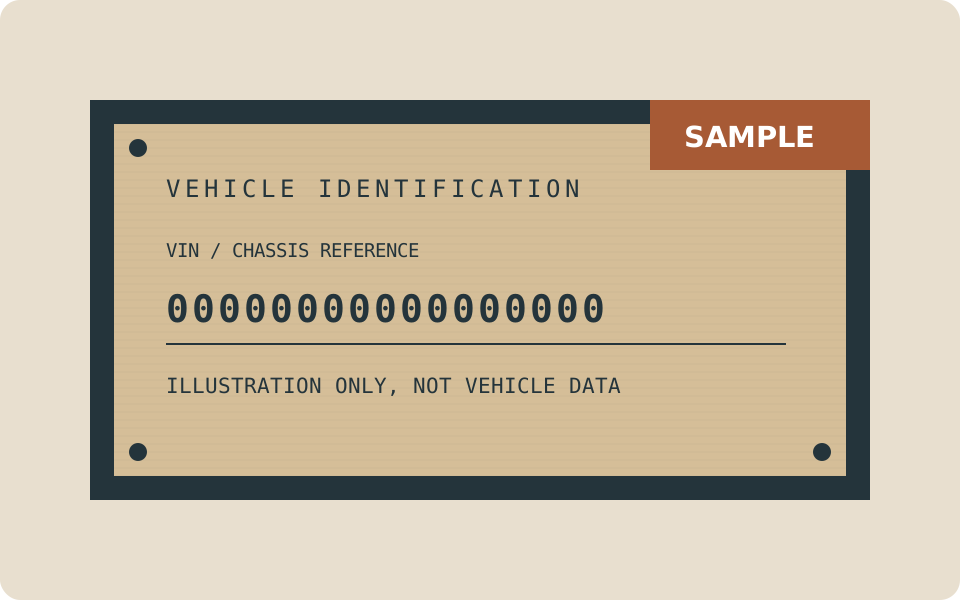
Open the relevant door and inspect the frame, pillar and accessible label positions listed in the handbook. The VIN may appear on a printed label or plate alongside other vehicle information. Do not confuse a paint code, weight figure or part number with the VIN.
Use this as one comparison point. A label is useful, but where practical compare it with a second manufacturer-applied location and the V5C. Read the entire sequence, not only the characters that are easiest to see.
Find the stamped location for that model
The permanent stamp may be in the engine bay, floor or chassis, depending on the vehicle. There is no single engine-bay position that applies to every car. Follow the handbook or manufacturer guidance rather than probing around components.
If the number is obscured, damaged or difficult to interpret, seek help. Do not modify the area or try to make the characters look like the number on a document. Record the uncertainty and resolve it before relying on the vehicle's identity.
Compare with the V5C
Find the VIN, chassis or frame number in the vehicle-details section of the V5C. Check it against the complete number on the car. Supporting service or insurance documents may contain the VIN as well, but the physical vehicle and current vehicle documents remain central to the comparison.
For older cars, do not reject a shorter chassis number simply because it does not match a modern 17-character format. Ask the manufacturer or an appropriate specialist about the format for that vehicle. Our chassis number guide explains the terminology.
If the car is not available
You can look through your vehicle documents or ask the organisation requesting the VIN what evidence it accepts. The free GOV.UK/DVLA vehicle enquiry does not return the VIN.
If you only have a UK registration, VIN Reveal can show a free vehicle-details preview. Once you have checked the description, Request the £7 report leads to a £7 report including the full VIN and available vehicle information. This does not replace a physical comparison when you later have access to the car.
Keep differences unresolved until they are explained
If the vehicle and paperwork disagree, pause any purchase or administrative submission that relies on the number. Ask for the discrepancy to be investigated through the appropriate manufacturer, professional or official route. An online lookup is not a way to dismiss a physical mismatch.
A reading method that reduces transcription errors
Give yourself enough time and light. Read the sequence once from beginning to end, then compare it with the document character by character. If you cannot distinguish a character, change your viewing angle or ask for suitable assistance. Do not decide what it should be based on the make or the final few characters.
Keep any note tied to the registration and vehicle you inspected. If you view several similar cars in one day, a sequence copied without context is easy to put beside the wrong paperwork. The same care matters in workshops and fleet administration.
What about vans and other vehicle layouts?
A van, older utility vehicle or vehicle with a separate chassis may use positions that differ from a passenger car. Even models from the same manufacturer can have different access points. The handbook and manufacturer guidance are better than a generic location list.
This guide gives common areas, not instructions to dismantle a specific vehicle. If the documented location needs lifting equipment, trim removal or workshop access, ask someone qualified to handle it safely. A VIN lookup cannot make that physical access unnecessary when a comparison is required.
Distinguish a location problem from a record problem
Not finding the stamp is a location problem. Finding a stamp that differs from the V5C is a comparison problem. They call for different next steps. In the first case, establish where the manufacturer put it. In the second, pause and ask for the records and vehicle to be checked.
A report may supply a number to compare, but it does not explain away a difference. For a purchase, use the pre-purchase guide to keep the physical checks and the record lookup in the right order.
Questions about this page
Is the VIN always on the driver side?
No. Position varies by make and model. Use the vehicle handbook rather than assuming that a particular side or panel applies.
Should I remove trim to find the number?
Not without appropriate guidance and safe access. If the documented location is inaccessible, ask the manufacturer or a suitable professional for help.